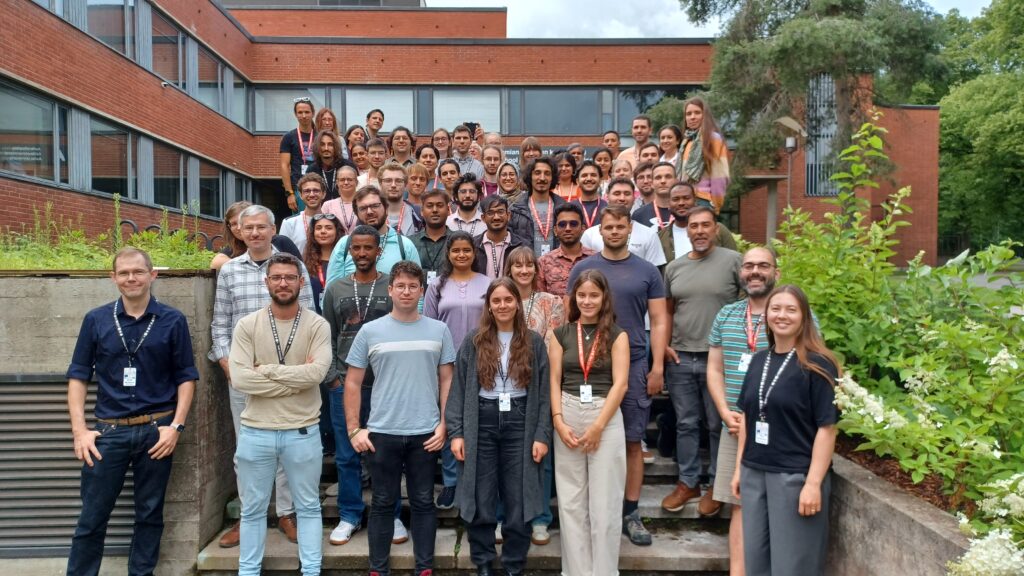
2025 was another busy year at OCAMM, with many seminars, events and activities. The beginning of the year was dominated by the AI in CHEM seminar series which continued its run with the talks by Prof. Alexandre Tkatchenko (University of Luxembourg), Dr. Rasmus Kronberg (CSC – IT Center for Science), Dr. Heikki Käsnänen (Orion Pharma), Erin Makara (VTT), Dr. Leonardo Espinosa (VTT) and Prof. Albert Bartók (University of Warwick).


Tkatchenko delivered an inspiring talk about the use of machine learning for the description of biomolecules, Kronberg let us know about the latest plans at CSC, including the new supercomputer Roihu, Käsnänen taught us how AI-based workflows are being used in the pharmaceutical industry to speed up drug development, Makara talked about modeling of amorphous materials to meet industry customers’ needs, Espinosa showed some examples of how his students have succeeded at utilizing their AI training in the real world, and Bartók, one of the pioneers of the atomistic machine learning field, gave us an overview of the state of the field.
OCAMM also collaborated with the Aalto University House of AI in the organization of the symposium AI for Science: from molecules to materials, where various examples of the application of AI/ML techniques in the materials and biomolecular fields were presented by researchers from across the university.
One of the highlights of the year was the organization by OCAMM of the Computational Chemistry Days, the main annual event of the computational chemistry and materials science community in Finland. We welcomed Fernanda Duarte from the University of Oxford, UK as the plenary speaker and heard from new PIs and promising junior researchers from across Finland.
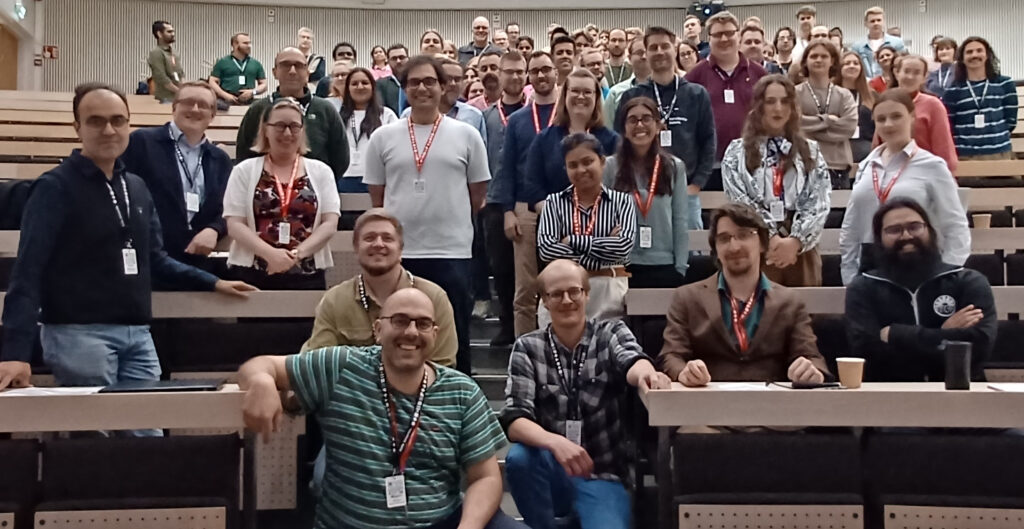
To close the 2025 calendar year of events, OCAMM organized the COST NanoSpace – AI in Astrochemistry Training School, an international workshop at the intersection between astrochemistry, molecular modeling and machine learning. We listened to many interesting lectures by experts from Europe and the US and learned a lot of new things about the evolution of carbon-based molecules in the interstellar medium.